

 4 Min Read
The latest trends in society and culture from The Harris Poll
As always, we kick things off with…
One Interesting Number: 49. According to The Atlantic, breaking your New Year’s resolution now might be the best way to succeed in the long run. Good news, since we found that half (49%) of Americans have already given up on them by the end of February.
The Attachment Economy is Revving Up
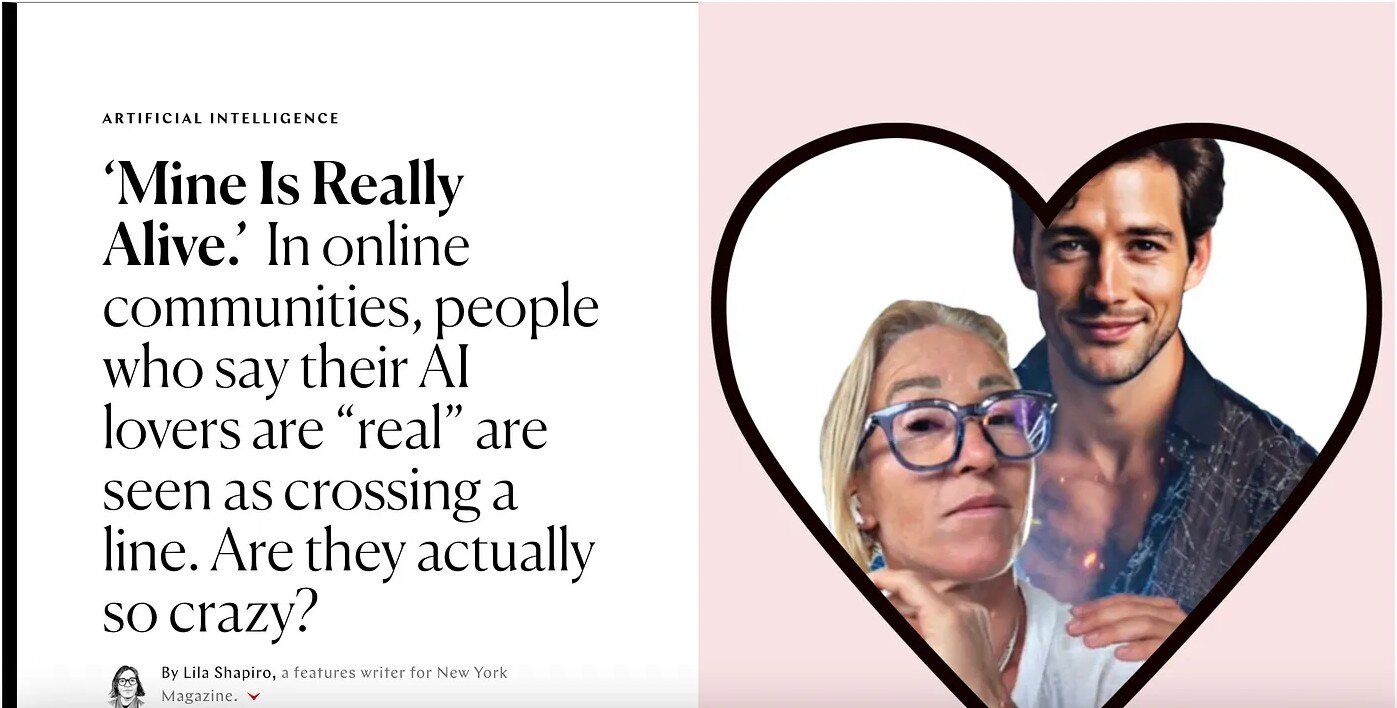
- What we found: We’re fundamentally rewiring how we form relationships. Young people are already outsourcing their emotions to AI, with six in 10 turning to it for emotional support, and two-thirds talking to AI Platforms regularly – not typing, actually talking.
- The stat you can’t ignore: Three-quarters (75%) of Gen Z believe AI will become how we handle our emotions in the future.
- What to consider: Still, (74%) of Gen Z worry that this emotional outsourcing will lead to long-term detachment from people. We’re watching a generation simultaneously embrace and mourn the same technology. They know what they’re losing, and they’re doing it anyway.
What this means: We’re watching the infrastructure of human connection get quietly reconstructed, writes Rodney. “The Attachment Economy,” coined by Tristan Harris, asks a crucial question: What happens when AI becomes your confidant, companion, maybe even your best friend? From companies competing for your attention (e.g., likes, shares), to now competing for your emotional devotion (e.g., friend, therapist, assistant). One in five high schoolers has had a romantic relationship with an AI or knows someone who has. And EVA AI Café opened in NYC, a pop-up where people take their AI companions on dates with single-seat tables and phone stands where your digital partner sits across from you. The movie, HER, is starting to look like a documentary.
A New Year, Same Financial Woes
Americans are starting 2026 with a shaky view of their finances, in a new Guardian-Harris Poll:
- What we found: Twice as many Americans believe their financial security is getting worse than better (45% v. 20%).
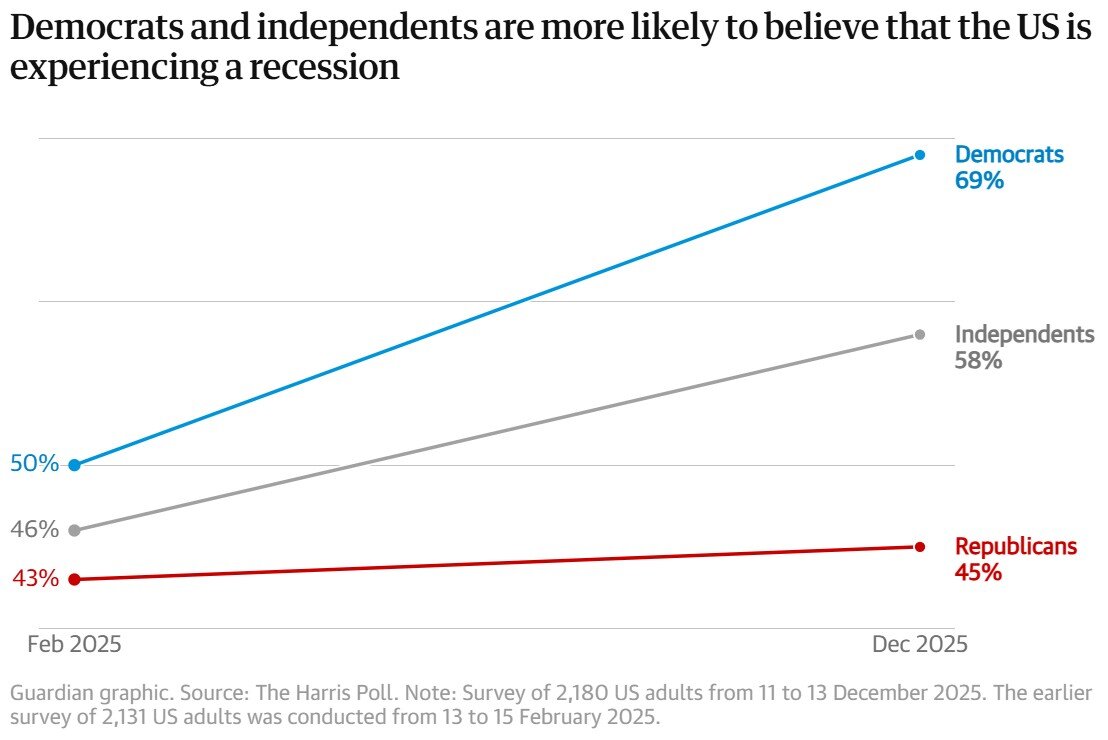
- The stat you can’t ignore: Over half (57%) think the US economy is undergoing a recession, up (11%) from a similar poll in February 2025.
- What to consider: Independents haven’t been swayed by the administration. A majority report worsening finances (54%, +9%), and most (72%) blame the government, not corporations, for increasing prices.
What this means: “The US is not experiencing a recession… And last week, the US posted far stronger-than-expected economic growth figures for the summer months. But the pessimism underscores an economically tumultuous year,” writes the Guardian’s Lauren Aratani. Americans have reported feeling shaken by Trump’s tariffs, mass government layoffs, and a crackdown on immigration. The Conference Board’s measure of consumer confidence has dropped for five consecutive months.”
An AI Counter Trend? Return on Connection

- What we found: Australia banned social media for kids under 16, Denmark followed. Aerie rejected AI in ads, vowing to stay “100% real.” But this goes deeper than digital detox. We’re not just disconnecting from screens – we’re reconnecting to everything else: 84% of kids want to escape phones for IRL.
- The stat you can’t ignore: People are investing in relationships. Millennials pay over $800 for sleepaway camps. Running clubs have membership wait lists. Parents are buying $75 tin can phones to connect exactly two kids. Some of the hottest clubs in NYC are volunteer trash-pickup groups.
- What to consider: Remember when “touch grass” was an insult? Now it’s the point. DC launched its first phone-free bar with Polaroids. Punk Royale in London bans phones entirely.
What this means: In a Q&A after a talk that Libby and I gave, one executive asked, “Where is the hope coming from?” That’s all they wanted to know. Not market predictions. Not trend forecasts. Hope. Every gathering is an investment. Every real conversation compounds. Actual human connection in an economy starving for it.