

 4 Min Read
Solo Travel Takes Off, Easy to Spot AI Marketing Slop, and Doctor Appointments Are Like a Tough Table on Resy
The latest trends in society and culture from The Harris Poll
Hello from NYC.
One interesting number: 71. How do you measure a sport’s gradual rise in culture? Looking back in our archives, seven in ten Americans (71%) didn’t know the 1994 World Cup was happening in the U.S. But today, that number has dropped to 46%.
Solo Travel Takes Off
While traveling alone was once considered a niche pursuit, a new Mastercard/Harris Poll finds that solo travel is surging, with record-breaking interest.
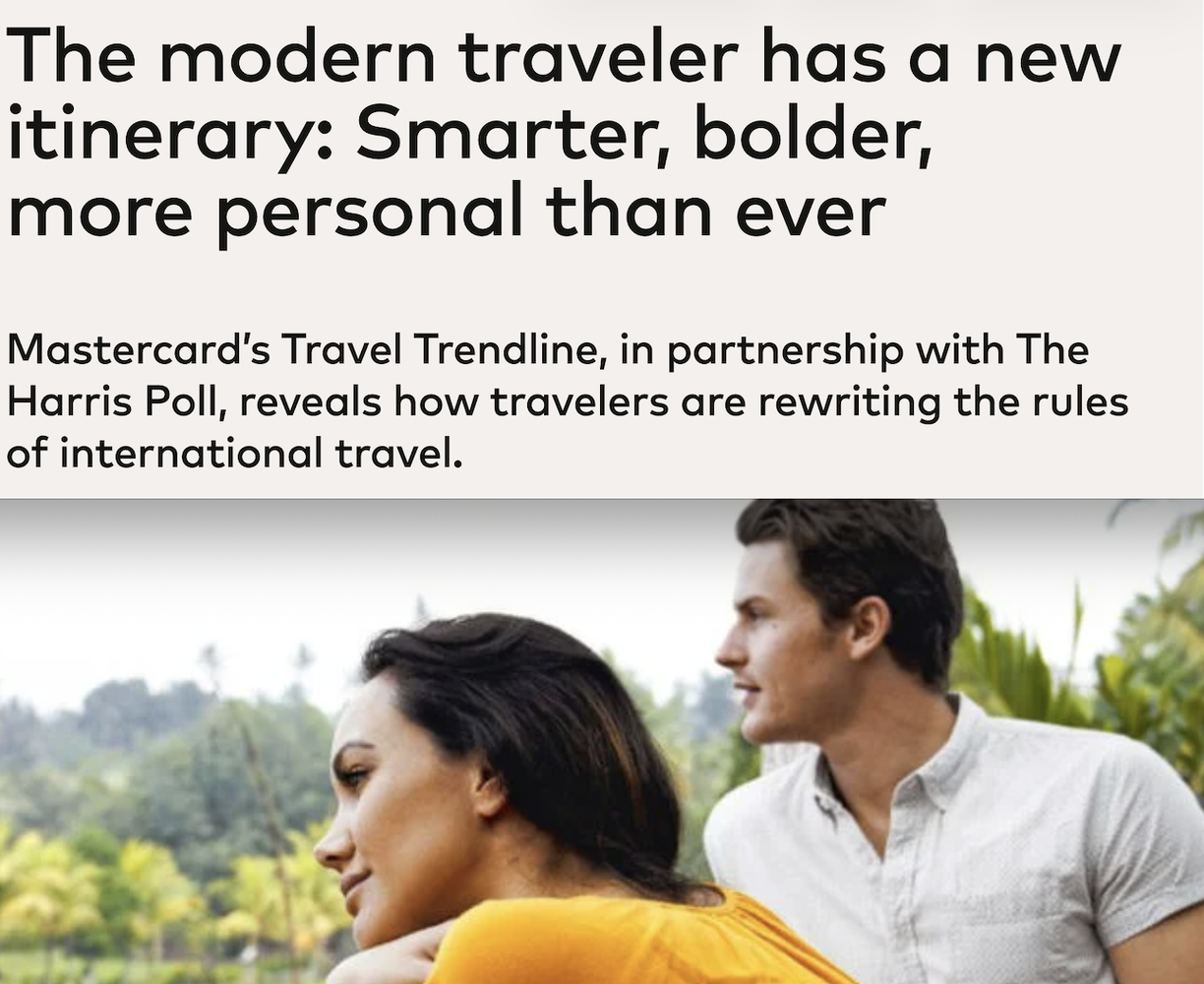
- What we found: Solo travel is surging in popularity into an estimated one trillion market opportunity. Two in five (39%) international travelers have already flown solo on a trip, with a fifth (20%) reporting their last trip was a solitary one.
- The stat you can’t ignore: Forget the stereotype of the backpacker reading The Hitchhiker’s Guide to the Galaxy: January 2026 had 1.6 million searches for “solo travel,” with solo travel terms jumping 230% over the last decade.
- What to consider: Going solo doesn’t mean going alone. Seven in ten international leisure travelers are interested in solo experiences designed to connect them with like-minded people.
What this means: The bottom line – Solo travel has evolved from an act of independence into an opportunity to build new relationships over shared interests and create memorable experiences without following a tour guide’s flag through Venice.
Consumers Can See Through Your AI Marketing Slop
AI is speeding and scaling up marketing, but a new Canva/Harris report on The State of Marketing and AI reveals that consumers remain highly attuned to advertising quality and trust brands that don’t fall prey to bad AI marketing practices.
- What we found: Two in five marketing leaders (41%) describe AI as functioning like a “director.” A similar number consider it a “collaborator” (39%).
- The stat you can’t ignore: Yet, they’re calling out AI slop. Two-thirds imagine the future of ads will all look and feel like the same AI-generated slop (69%) and that AI-generated ads are often so obvious it’s laughable (65%).
- What to consider: Consumers can be harsh critics. Mentions of AI slop have increased 9x in 2025, with consumers most bothered by social media posts and product photos appearing AI-generated (53% and 52%, respectively).
What this means: “ÁI has changed how marketing gets made, but not what makes it effective. Speed and scale matter, but they don’t build trust on their own. We need to build a smarter system where AI drives efficiency while brand governance and creative judgment protect what makes a brand distinctive,” said Emma Robinson, head of B2B growth marketing at Canva.
Getting In To See My Doctor: The New Health Crisis
Most Americans have a family doctor, but getting an appointment is dramatically harder, according to a new survey by HealthDay: Patient First Healthcare and Harris: The Growing Breakdown in Access to Family Medicine in America.

- What we found: More than four in five Americans (84%) have a family physician or primary care doctor, yet over half (58%) of those are unable to receive care when they need it.
- The stat you can’t ignore: Accessing primary care is likely to become even more challenging in the upcoming years with a growing shortage of PCPs. Healthcare needs about 40k more PCPs by the year 2036.
- What to consider: In the United States, primary care physicians serve on the front lines of health care, yet the health worker shortage has remained real for Americans. In 2022, we found that nearly half (45%) had trouble scheduling appointments.
What this means: “These findings underscore a paradox at the heart of American healthcare: People clearly understand the value of family medicine, yet our systems have failed to make it accessible or reliable,” said Kathy Steinberg, vice president of health care research at The Harris Poll.