

 5 Min Read
What Do Moms Want This Mother’s Day? Self-Care, Delight & Support.
Somehow, we have made it to the end of April – just two weeks out from Mother’s Day! As families make cards, purchase flowers, and prepare to celebrate mom, we employed data from QuestBrand by The Harris Poll to see what 10 brands out-perform with mothers.
- A Harris Poll conducted by our Thought Leadership & Futures team on behalf of Skylight found that the mental load of being a parent equates to a nearly full-time job.
- On average, parents spend 30.4 hours per week planning and coordinating family schedules and household tasks.
- Parenting’s mental load consumes more than half (63%) of parents’ brain space in the average day – not leaving a lot of room for mom to focus on herself.
- This significant mental load triggers stress. So, it makes sense that four of the brands on our top brands list are cosmetics brands and retailers that support mom’s self-care routine:

Want to see what other popular brands resonate with mom? Read the full story to make sure you get mom what’s really on her wish list.
The Sandwich Generation’s Retirement Is Under Threat – Athene-Harris Poll
No, we aren’t talking about hoagies, Philly cheesesteaks, or Reubens. The Sandwich Generation falls between 40-59, and provides financial or caregiving support to both their adult children and elderly relatives. Simultaneously caring for both the younger and older generations places significant strain on these Sandwichers, leaving many to worry whether retirement is out of reach.
In a Harris Poll conducted by our Custom Research team on behalf of Athene, we explore how Americans in the Sandwich Generation think about their future retirement:
- Will I be able to live comfortably?: 53% of respondents are concerned about maintaining their standard of living in retirement.
- Shifting goals: 79% of respondents adjusted their retirement goals to support their adult children or aging relatives.
- I guess I’ll keep working: 34% delayed their retirement, while 9% are not planning to retire at all.
- Role reversal: 30% are concerned about having to rely on their children for financial support in retirement.
- Carrying an unequal burden: women experience significantly higher levels of financial strain from caregiving than men (53% vs. 40%).
Takeaway: “As the retirement age population in the U.S. grows, the Sandwich Generation represents the next wave in America’s retirement crisis, with potential long-term implications for individuals, families and the economy.” – Mike Downing, Athene Chief Operating Officer.
Take A Lesson From Gap On How To Win With Gen Z – Brand Story
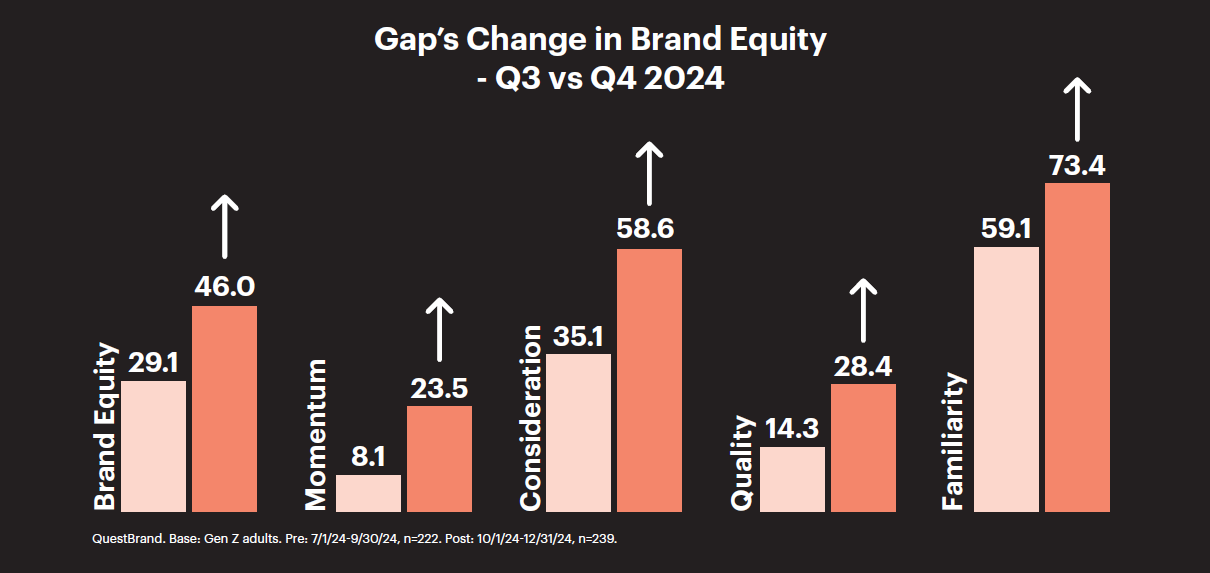
Popular in the 90s and early 2000s, the Gap brand had all but disappeared from discussion for the last decade. But it’s back! Using data from QuestBrand by The Harris Poll, Gap ranked 2nd in Ad Age’s quarterly Gen Z brand tracker. This tracker ranks the top 20 brands by quarter-over-quarter brand equity growth among Gen Z adults. Why the sudden change?
- In 2024, Gap roared back under the new leadership of CEO Matthew Boss and Creative Director Zac Posen by engaging with pop culture, and taking a social-first content approach.
- This included working with singers Troye Sivan and Tyla to produce music videos – both videos received 60+ million views on TikTok.
- Gap also created a holiday collection with the popular fashion brand Cult Gaia and partnered with TikTok creator Julia Huynh (1.1 million followers) to create a “hoodie that hoodies.”
- From Q3 (29.1) to Q4 (46.0) 2024, Gap’s brand equity jumped +16.9%.
Read the full story, and then take a deeper dive into the world of retail — Download our Retail & Ecommerce Industry Snapshot to understand how American shoppers think and act.
Half Of Consumers Abuse Retailers’ Return Policies – Forter-Harris Poll
Have you ever purchased and worn a piece of clothing, only to later return it? It turns out that this, and other types of return policy abuse, are much more common than many realize, placing significant financial strain on retailers.
A Harris Poll conducted by our Harris On Demand team on behalf of Forter examined U.S. and U.K. consumers’ online shopping and return habits. A few key takeaways:
- Cheating is prevalent: 49% of respondents admit that they abused retailers’ return policies within the last year.
- Taking advantage of a good thing: 68% of respondents believe retailers make it easy to abuse flexible return policies.
- Borrowing, not buying: 46% of young (ages 18-34) U.S. consumers and 48% of young U.K. consumers wear and then return expensive items that they cannot afford.
- Another day, another account: 58% of consumers say it’s easy to open multiple online accounts with the same retailer to take advantage of promotions.
- What’s a retailer to do?: 16% of consumers have stopped shopping with a retailer altogether because they made their return policy stricter.
Takeaway: “Policy abuse is costing retailers billions of dollars. While consumers react to economic shifts, becoming more intentional and savvier with their spending, retailers must adjust, too. Our report found that a one-size-fits-all approach to any policy – whether it’s returns, promotions or loyalty programs – will leave today’s retailers exposed. Instead, by knowing who they’re doing business with, retailers can strike the crucial balance between customer-friendly policies and protection against serial abuse.” – Ozge Ozcan, Forter Chief Customer Officer