


 4 Min Read
The latest trends in society and culture from The Harris Poll
Good morning from London, where we announced yesterday the expansion of our Harris Quest live brand equity measurement platform, with a discussion on AI trends and branding.

One interesting number: 33. It turns out that streaming preference is the new modern dating dealbreaker, where a third would end relationships over differences in their TV and movie tastes. Maybe pick up a book instead?
Why Streaming TV is Suddenly a Socially Accepted Behavior
Speaking of which, a new Harris Poll/Tubi study reveals that in an age of doomscrolling and social media addiction lawsuits, TV has become America’s comfort food again.

- What we found: Contrasted with the social isolation of social media, three-quarters (75%) of Americans say that households streaming together is a form of ‘quality time’.
- The stat you can’t ignore: Half (52%) of Americans are now traveling to friends’ houses specifically for dedicated viewing sessions — up 15% in a single year.
- What to consider: From the old days of Seinfeld or Friends, Americans are rebuilding viewing rituals and making the watch party the new dinner party. Two-thirds (65%) feel part of a community based on the shows they watch, up 15%.
What this means: “Somewhere between the surgeon general’s warning about social media and everyone losing hours to doomscrolling, says our CSO Libby Rodney. TV stopped being the guilty choice. And now it’s the good one. ‘I binged four episodes’ lands like a recommendation, whereas ‘I lost four hours on Instagram’ lands like a confession. The villain and the comfort have completely swapped places.”
We Told You Two Years Ago. Print is In With Youth
Over the past decade, the artifacts of identity have been mostly digital. Profiles. Feeds. Followers. Yet today, print is the new memory-maker among American youth.
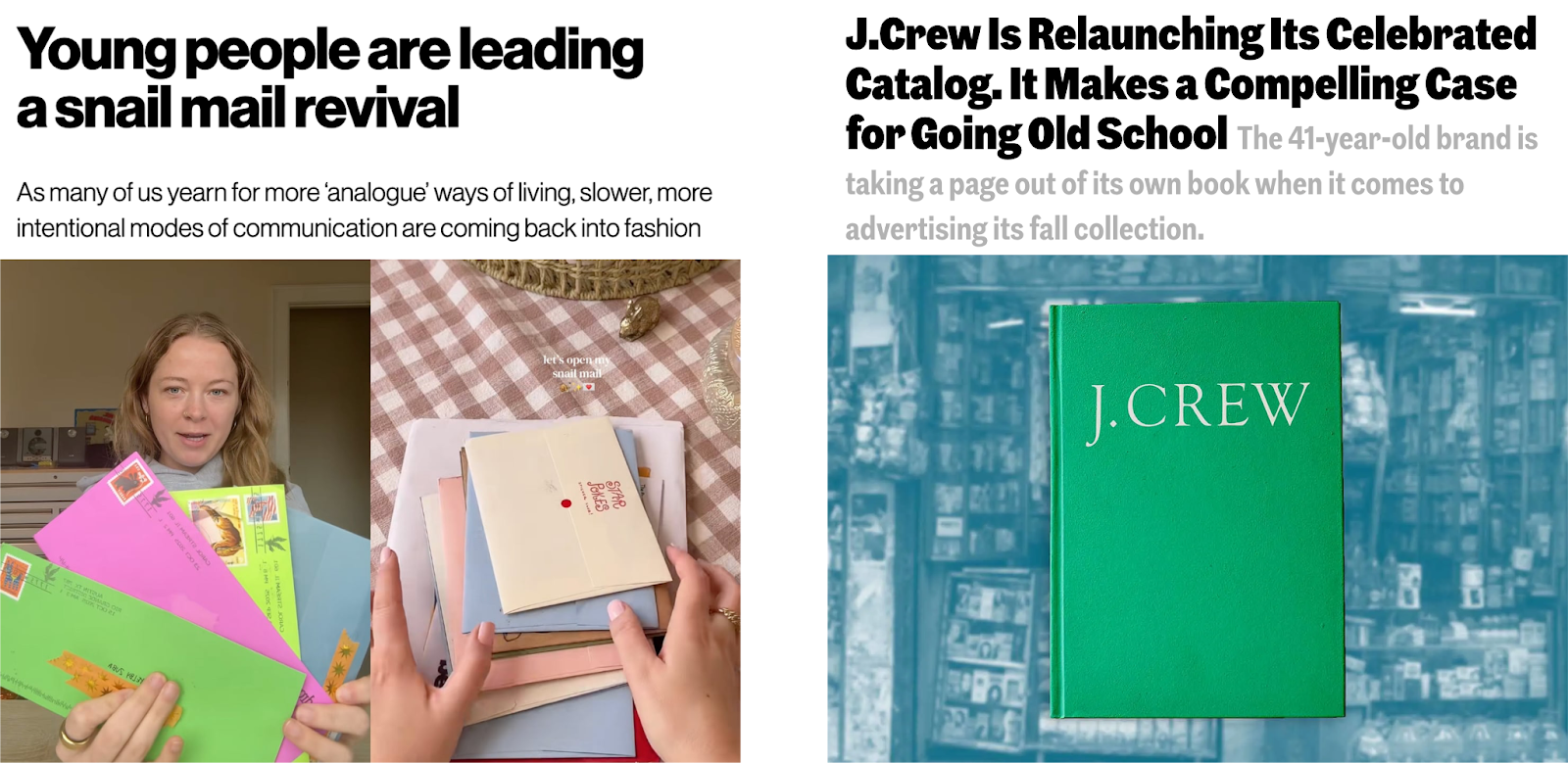
- What we found: Over two-thirds (70%) of Gen Z now say they want to collect physical things, with two-thirds (64%) keeping catalogs and mailers as décor.
- The stat you can’t ignore: HBR found that one luxury e-commerce retailer increased sales by 28% and inquiries by 77% by adding print catalogs. It yielded a direct ROI of 600%.
- What to consider: When most Americans (71%) say print catalogs/magazines feel more authentic than digital campaigns, companies like J. Crew reintroduced their iconic print catalog, and Nordstrom found customers at home with a 100-page gift guide.
What this means: In a world where life is being mediated more and more by AI and algorithms, physical things are proof of individuality and personal meaning. So, as a marketer, it’s not just what shows up in feeds, but what people want to hold onto.
The Era of Prescriptive Travel
A growing number of travelers are taking a flight over a prescription, choosing therapeutic vacations full of luxury treatment programs.

- What we found: One-fifth (19%) of Americans have taken a wellness-first vacation to heal and recover, while nearly another half (45%) are interested in taking one.
- The stat you can’t ignore: The global medical tourism market is projected to exceed $700 billion by 2033.
- What to consider: From $44k stem cell infusions to fertility enhancement programming in the Himalayas to health-focused cruises, wellness travel is a growing investment in health and longevity.
What this means: “Wellness travel isn’t just a one-time splurge, it’s a thoughtful investment in health and longevity,” says Harris Poll’s trends tracker Marie Aloi. “As wellness continues to influence travel itineraries, brands can win affinity by offering up experiences that serve as personal healing journeys.”