

 4 Min Read
The latest trends in society and culture from The Harris Poll
Good morning from Davos to LA, where our leaders are this week. As always, we start with…
One Interesting Number: 70. Seven in ten Americans use AI for travel planning, according to a Harris/Money Lion survey shared on an Agentic Engine Optimization (AEO) presentation in Davos this week. Speaking of…
Page Society-Harris Poll Launches Annual Confidence in Business Index at Davos
While the three-day Greenland diplomatic crisis sucked the oxygen out of this week’s World Economic Forum, global public expectations of business are rising–along with the criticism, according to our annual Page Society-Harris Poll Confidence in Business Index, which surveys over 15,000 citizens across 14 countries. (See full report here)
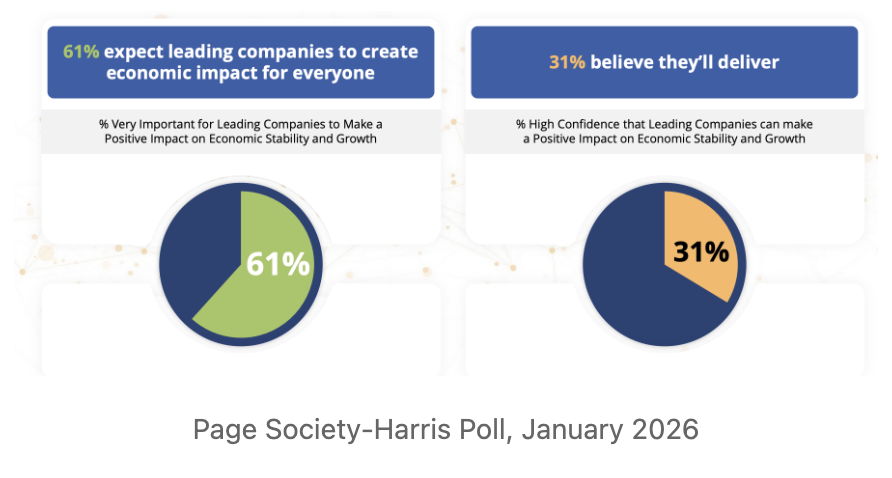
- What we found: Economic stability tops citizens’ global concerns. Yet less than a third (29%) say they see companies taking action on key issues and clearly explaining what they are doing and why.
- The stat you can’t ignore: Six in ten (61%) globally expect leading companies to create economic impact for everyone. Yet, only (31%) believe they’ll deliver.
- What to consider: Public anger toward business is growing. In other Harris Poll data, Americans blame corporations and government equally for high tariffs and the cost of living. Also, nearly half of the companies in our 2025 Axios-Harris Poll 100 saw their reputations decline. At the same time, a company’s owned media channels are less impactful: Public searches for company information are less common on a firm’s website (47%) than on YouTube (55%) and social media (53%). There’s even been a +10%-pt increase in GenAI usage from 2024 (39%).
What this means: People see more potential for business to make an impact than they currently see being realized. This lagging confidence is driven less by opposition to corporate involvement and more by a lack of visible action and understanding. Corporations spooked by the culture wars should be evidence-based and avoid divisive issues, like demonstrating how they’re helping their customers/employees be better off financially.
Falling for Romantasy
People are forming fandoms and friendships around genres once thought niche – romantasy, sports romance, etc. – as our research with Audible, covered in Axios, shows.
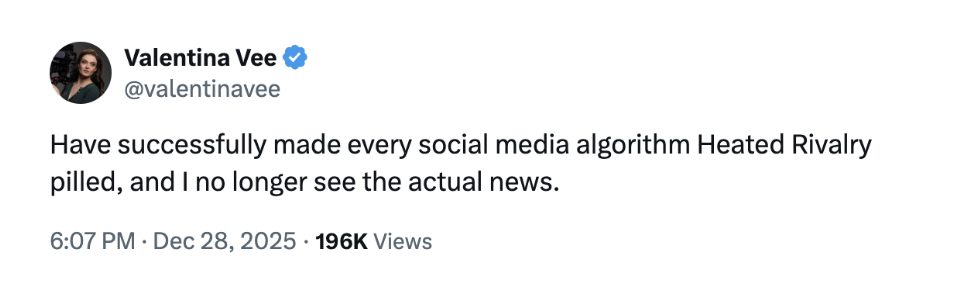
- What we found: Almost a quarter (23%) of audiobook fans are hooked on sports romance, with even (23%) of male listeners now tuning into romance.
- The stat you can’t ignore: Almost 80% of all Audible sales of “Heated Rivalry” happened in the week leading up to and through two weeks after the show’s premiere.
- What to consider: This fandom is extending beyond headphones and screens into real-world brand impact. Our HarrisQuest tracking shows that Gen Z loves the NHL more than any other major league.
What this means: “Narrative audio is no longer just entertainment. It’s where culture and community are being formed,” writes Axios’ Maxwell Millington. As we’ve seen with the growing fandom around Heated Rivalry, it pays to extend content and fan interaction across multiple entities – screens, social media, pages, etc.
Throwback Spending
The plush toy craze we’ve covered before wasn’t a one-off – Americans are purposefully seeking out to spend on their childhood whimsy.
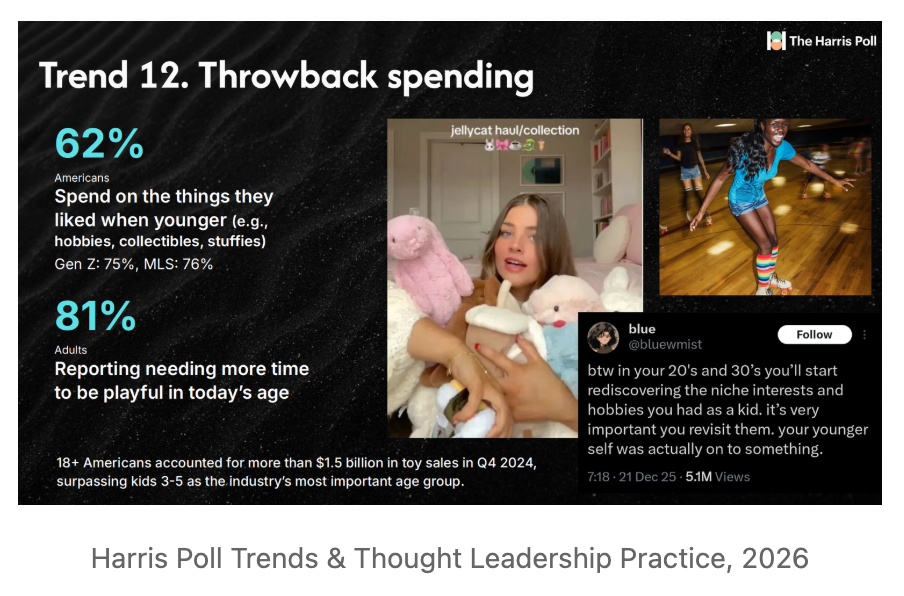
- What we found: Two-thirds (68%) feel nostalgic for eras before their lifetime, and three-quarters (73%) love the hobbies of those eras.
- The stat you can’t ignore: Nearly two-thirds (62%) of Americans now spend on things they liked when they were younger – especially Gen Z (75%) and Millennials (76%).
- What to consider: For many, returning to a childhood hobby is more than a new form of entertainment; it’s an escape: (66%) say it helps ease stress from modern life, or they are anxious about the future.
What this means: Revisiting childhood hobbies is more than just adding some whimsy to your daily life; research shows that highly playful adults are more resilient when facing challenges and more positive about the future. In an age when consumers seek reality-rich experiences, this nostalgic connection can add meaning.