


 4 Min Read
The manager-employee relationship is one of the most consequential dynamics in the American workplace. Right now, most American workers say they’re on the wrong end of that relationship.
New research from The Harris Poll finds that six in 10 employed US adults currently have a toxic boss. Seven in 10 say they’ve had one at some point in their career.
The findings paint a stark picture: toxic leadership isn’t a minor workplace irritant. It’s a significant driver of burnout, job loss, and financial harm.
What makes a boss toxic?
The survey defined a toxic boss as someone who exhibits harmful workplace behaviors. Workers identified the most common traits as:
- Unfair preferential treatment
- Lack of recognition
- Blame-shifting
- Unnecessary micromanagement
- Taking credit for others’ ideas
- Unreasonable expectations
- Unprofessional conduct
- Discrimination based on personal characteristics
The toll on workers
The impact reaches across mental health, finances, and careers.
Mental health takes the biggest hit. Nearly half of workers (47%) say their boss’s behavior is causing stress, burnout, or declining mental health. More than half (53%) have sought therapy because of a toxic boss.
Financial damage is common. One in three workers say a toxic boss has cost them money through missed bonuses or stalled promotions.
People are walking out. Two-thirds of workers say they’ve changed jobs because of a toxic boss.
Many are overworking to cope. 66% say they’ve responded by working harder – including on weekends and days off – trying to meet unreasonable demands.
The findings are especially stark for LGBTQIA+ workers: 75% say they’ve had a toxic boss at some point in their career, compared to 70% overall.
Workers are pushing back
Many aren’t staying silent. More than half (55%) say they’ve taken at least one action to address their boss’s harmful behavior.
Gen Z is leading the charge. 73% of Gen Z workers say they’ve pushed back against a toxic boss – more than any other generation.
Why toxic bosses exist
Workers aren’t just blaming individual personalities: they point to systemic failures.
71% attribute toxic behavior in part to the pressure of current economic conditions. And 44% say their company invests more in AI than in one-on-one coaching for people managers or developing the next generation of leaders.
“We’re in the largest technology investment cycle in a generation, and the human side of work is being left behind,” says Libby Rodney, Chief Strategy Officer at The Harris Poll. “Toxic leadership isn’t a character flaw – it’s an investment failure. These are today’s managers who were never trained or held to a standard, and now we’re asked to lead through a transformation they weren’t equipped for before AI even arrived.”
What workers say will fix it
Workers are asking for better leadership.
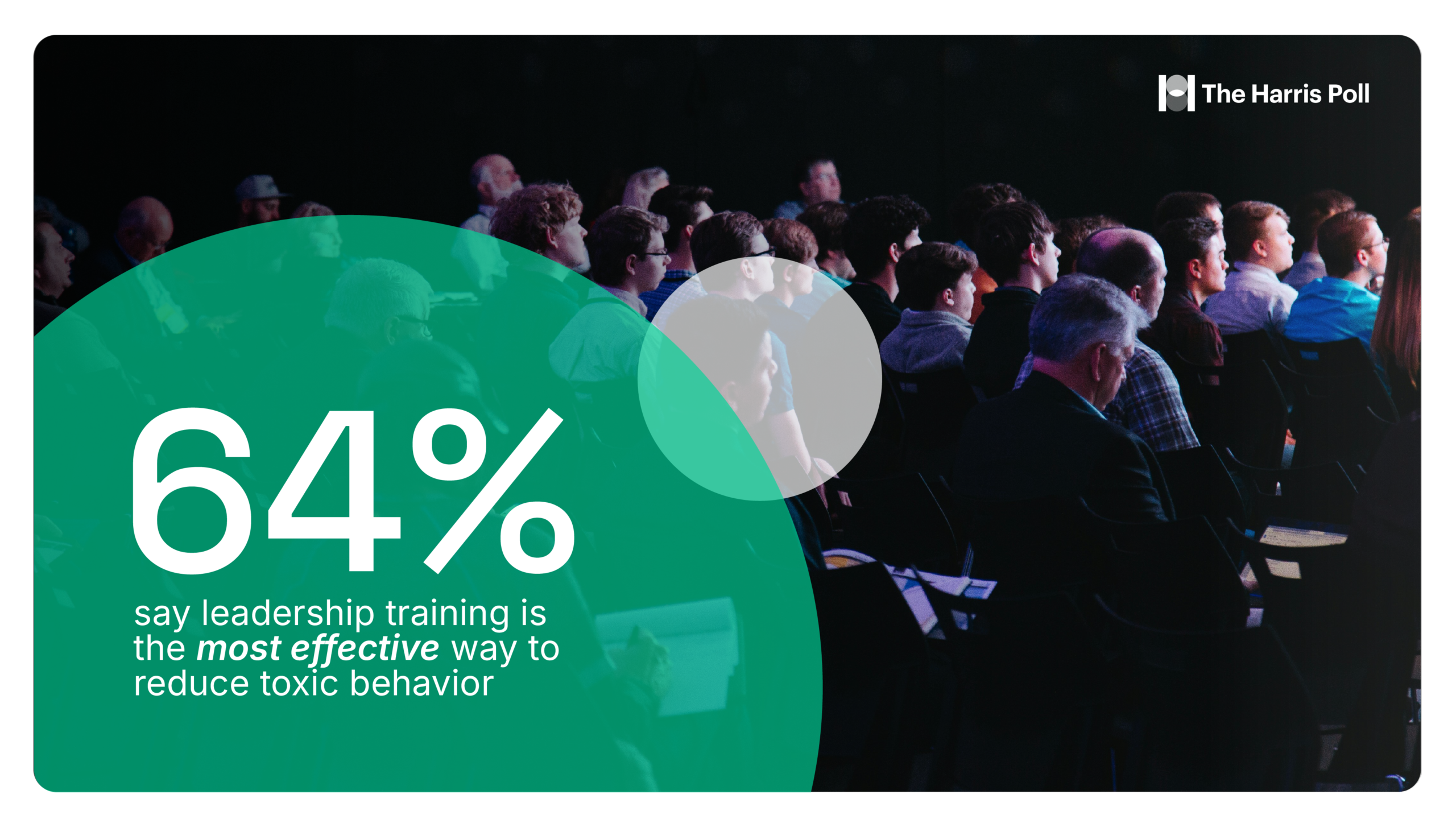
64% say leadership training is the single most effective way to reduce toxic behavior and build healthier workplaces. Better pay ranked lower. More headcount ranked lower.
The ask is simpler – and more achievable – than most companies assume: invest in the people who manage people.
Want to understand how leadership is showing up inside your organization? The Harris Poll can help you find out – and build a strategy around what the data reveals.
About the research
This survey was conducted online within the U.S. by The Harris Poll from April 16th to 18th, 2026, among a nationally representative sample of 1,334 employed U.S. adults. This research comprises 229 Gen Z (ages 18-29), 568 Millennials (ages 30-45), 408 Gen X (ages 46-61), and 129 Boomers (ages 62 and older). A “toxic boss” refers to a boss or supervisor who exhibits harmful workplace behaviors, including unfair preferential treatment, lack of recognition, blame-shifting, unnecessary micromanagement, unreasonable expectations, being unapproachable, taking credit for others’ ideas, acting unprofessionally, or discriminating against employees based on personal characteristics.