


 4 Min Read
The latest trends in society and culture from The Harris Poll
Good morning from frigid NYC.
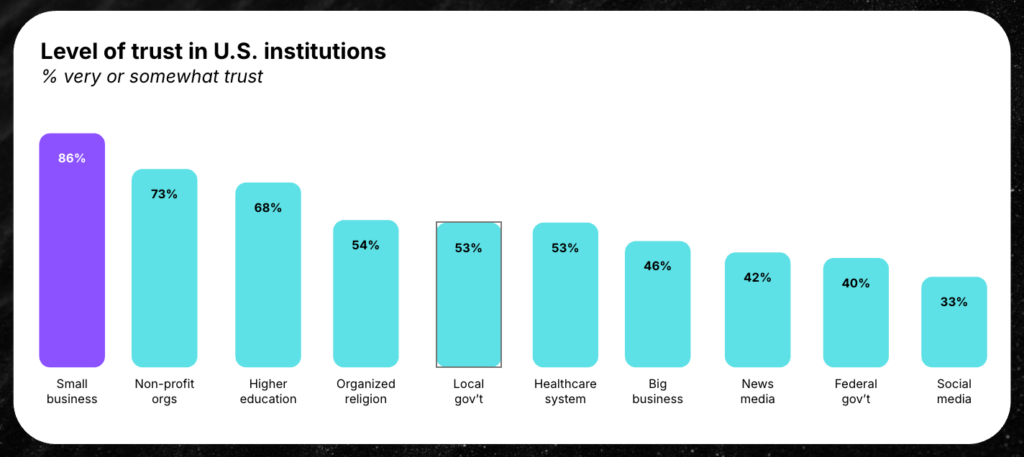
One Interesting Number: 59. Nearly six in ten Americans (59%) feel large companies don’t understand their community, nor their daily life. Three-quarters want their brands to think locally in their marketing (e.g., pop-ups, retail open houses, influencer partnerships). Small is the new big in trust and commerce, as this Harris Poll shows:
1. What Happens When The Want Gets Quiet
In 2024, we began seeing widespread knock-on effects from GLP-1 use. Respondents reported that other healthy lifestyle changes were underway, ranging from reduced alcohol consumption to reduced social media use. (Clinical data now support our early surveys). And now, new Harris research explains how drugs meant to curb hunger hormones seem to also work to turn off the noise of unhealthy distractions:

- What we found: GLP-1s weren’t designed to quiet your urge to doom-scroll or online shop, but to regulate hunger hormones. Now, however, people are reporting that when the “food noise” goes quiet, so does… a lot of other noise. The betting. The drinking. The scrolling. The wanting.
- The stat you can’t ignore: The self-reported effects from GLP-1 users go far beyond the scale, with many reporting less alcohol cravings (28%), doomscrolling (21%), and gambling (18%, Gen Z: 31%).
- What to consider: Half of Millennials (52%) and Gen Z (48%) would take GLP-1s if they were confident it could help with an addiction outside of weight loss – gambling, gaming, social media (v. gen pop: 38%). (Deep dive into our colleagues Abbey Lunney and Libby Rodney’s research on GLP-1s in their Next Big Think! substack).
What this means: “Maybe the most interesting about what people say about GLP-1s, is how they say it: No shame. No whispers. No justification. Just people marveling at what it felt like to finally have a quieter brain,” says Libby. “To walk past the thing that used to pull at them and feel… nothing. To discover that the voice they’d been fighting their whole life wasn’t a character flaw. It was just noise. And noise, it turns out, can be turned down.”
2. Football Fans Throw The Flag on AI-Generated Content
While AI permeates work and daily life, viewers are increasingly hesitant to see AI-generated content on their screens.

- What we found: Roughly half or less of streaming or cable viewers are interested in AI-generated movies/TV shows (55%), short-form videos (50%), and content about their favorite fandoms (46%).
- The stat you can’t ignore: Less than a fifth (17%) of Super Bowl viewers want to see AI-generated ads, which is not much different than “techy generations” (Gen Z: 21%, MLS: 28%).
- What to consider: Americans believe companies overmarket AI. Three-quarters (74%) say AI is a new marketing ploy, and two-thirds (68%) want brands to stop using AI in their marketing campaigns.
What this means: Svedka Vodka is bringing back its robot mascot, Fembot, in a fully generative AI commercial at next weekend’s Super Bowl. Silverside AI is working on the ad, the same agency that led Coca-Cola’s much-talked-about AI Christmas ad.
3. Why The CEO is Too Proud (or Scared) To Ask For Feedback
Leaders want more input but hold back out of fear of the cost of asking for it, like a compromised reputation or being seen as weak, as our research with Turas Leadership shows.
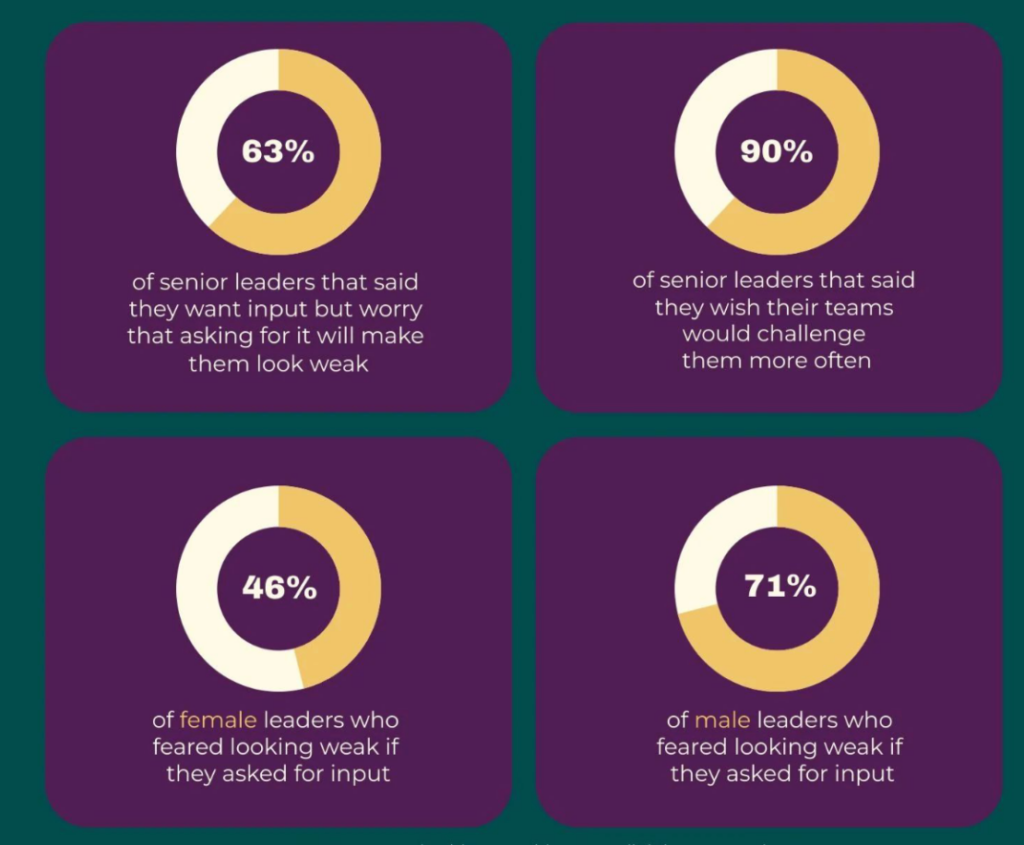
- What we found: Most senior leaders (90%) want their teams to challenge them and/or their company’s status quo.
- The stat you can’t ignore: Yet nearly two-thirds (63%) of these leaders say they want input from their teams, but fear appearing weak by asking for it (male leaders: 71% vs. female leaders: 46%; 25% pt difference).
- What to consider: When leaders fear that asking questions, inviting dissent, or admitting uncertainty will undermine their credibility, it has a potentially chilling effect on the entire organization, from productivity to culture.
What this means: Turas points out that most organizations build psychological safety downward (for teams), but not upward or inward (for leaders). When leaders don’t feel safe to model vulnerability, openness, and shared decision-making, those behaviors don’t take root anywhere else.