

 4 Min Read
The latest trends in society and culture from The Harris Poll
Good morning from NYC.
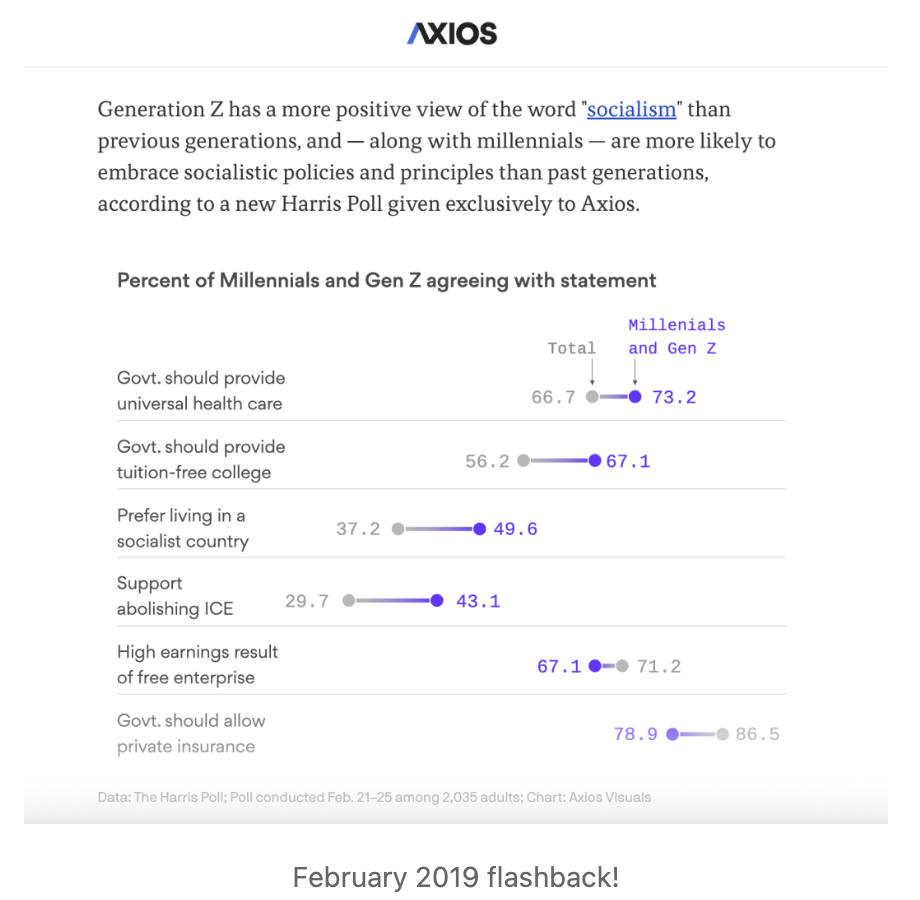
One Interesting Number: 49.6: Flashback: In 2019, we fielded a poll showing that nearly half of Gen Z would prefer to live in a socialist country. Two-thirds wanted tuition-free college, and almost three-quarters supported universal healthcare. Today, a democratic socialist is New York City’s Mayor-elect in large part due to disenfranchised young people.
Shout-outs to our friend Stef Kight at Axios and Tawny Saez , Andrew Higham, and Jacklyn Cooney (my youth squad at The Harris Poll for this prescient piece of research.
Climate Lost the Battle for Mental Real Estate. Here’s How to Win It Back.
The climate fight isn’t about convincing deniers anymore, our new poll with The Milken Institute, which surveyed 7,036 people across seven countries. In fact, only (5%) of people globally deny climate change. The real problem? We’re paralyzing the (95%) who believe.
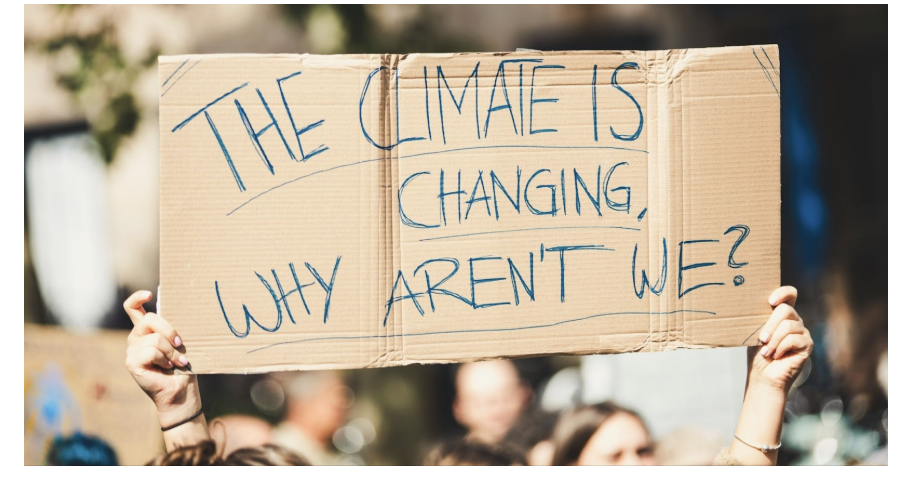
- What we found: Economic concerns dominate people’s mental space (54%). Climate? It’s sitting in fourth (31%), a massive 23-point gap, trailing health care and job security.
- The stat you can’t ignore: When climate does manage to grab a slice of attention, nearly half (46%) immediately think “threat.” Their cortisol spikes. Their brain goes into defensive mode and only (14%) hear solutions or opportunities.
- What to consider: To really move people from paralysis to action, you’ll have to lead with economic benefits, then connect to climate.
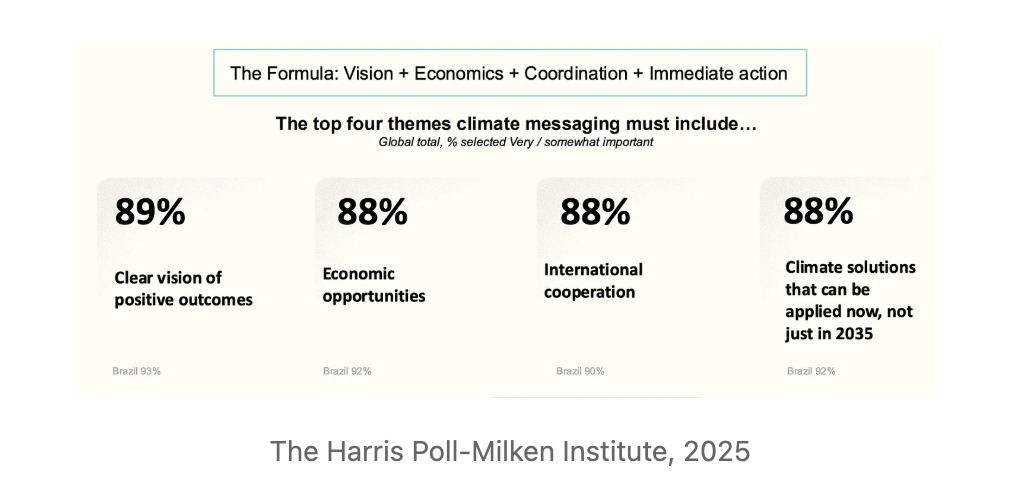
What this means: “We’ve created a massive vision void, losing the battle for people’s mental bandwidth,” writes our CSO Libby Rodney. “You want people’s attention? Stop competing with the 54% of mental bandwidth consumed by economic anxiety. Piggyback on it instead. When someone’s worried about their doubled electric bill, show them their neighbor’s solar panels cutting costs by 40%. That’s climate action disguised as economic relief. The research screams this truth: Local beats global. Tangible beats abstract. Today beats 2050.”
It’s Not Just Affordability, Americans Anxious Over Jobs Too
Voter frustration over affordability fueled Democratic wins in last week’s state and local elections. On top of that, Americans are becoming uneasy about the job market, as evidenced by our new poll with Bloomberg News released yesterday morning.
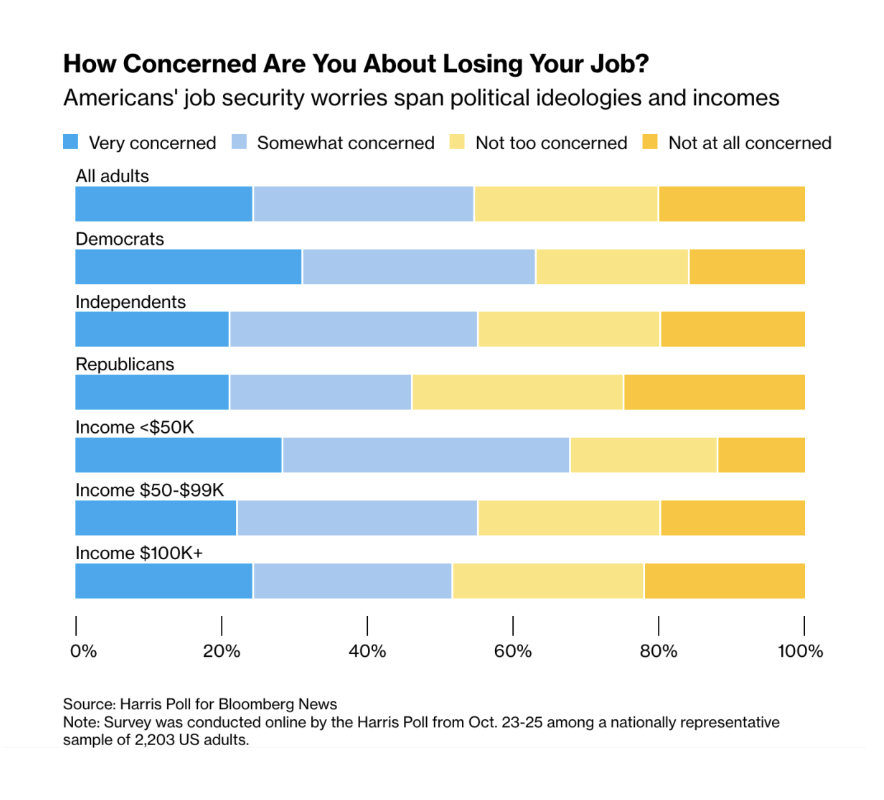
- What we found: Over half (55%) of employed Americans say they’re concerned about losing their jobs.
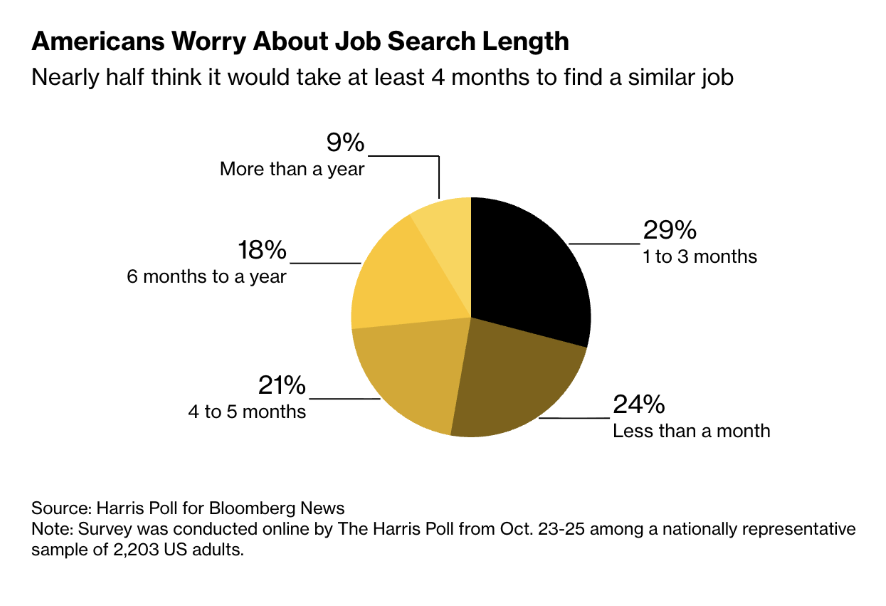
- The stat you can’t ignore: Nearly half (48%) believe it would take them four months or longer to find a new job of similar quality if they lost their current one.
- What to consider: It builds on households’ exasperation over the cost of living. A majority (62%) said the cost of their everyday items had climbed over the last month, and nearly half of those said the increases have been difficult to afford.
What this means: “Job growth has slowed, with payroll gains having plunged from an average of 168,000 a month last year to just 27,000 in May through August — the most recent month for which there’s data. Inflation remains above the Federal Reserve’s 2% target,” details Bloomberg’s Jarrell Dillard and Hadriana Lowenkron. “That angst follows a drumbeat of layoff announcements by major employers, including Amazon.com Inc., and Starbucks Corp. Outplacement firm Challenger, Gray & Christmas Inc. calculated the most job cut announcements for any October in more than two decades.”
‘Weird’ Marketing’s Cultural Advantage
- What we found: Nearly half (44%) of teens aged 13 to 17 lean more towards unapologetically weird brands.
- The stat you can’t ignore: Two-thirds are even more likely to engage with brands that post completely unhinged content that makes them laugh.
- What to consider: From Wendy’s tweets roasting people to Nutter Butter’s brain-rot posting, the more out there, the better. This ‘weird’ personality of brands isn’t just a novelty; they’re hacking cultural relevancy.
What this means: As part of a counter-move to algorithmic sameness, American kids are choosing weird and, as a result, resetting the terms of how brands earn their attention. When algorithms decide what’s in and what’s out, content begins to feel meaningless, and these organic brain-rot moments are “just what’s needed” for a little dose of levity. “Embracing ‘the weird factor’ is an opportunity for brands to signal playfulness and spark talkability,” says our own Marie Aloi. “It’s a timely advantage in a market where attention is scarce and content feeds are overwhelmingly saturated with copy-paste content.”