

 4 Min Read
AI’s Blame For Toxic Bosses, Crypto Blues, and The New Golden Age of Health
Good afternoon from NYC via Dallas and LA.
One interesting number: 25. There’s an AI-culture gap in offices. One in four (25%) aren’t comfortable telling colleagues they used AI to complete a work task.
One quick plug: At The Harris Poll, we’re striving to provide you with good dinner-party conversation. So we’ve launched a new podcast, “So, Get This.” It’s 12-15 minutes of the underlying meaning of the latest trends in culture and society. This week: Sleep Away Camps, Trash Clubs and Smoking Mobs: What the sudden craving for IRL experiences says about screens, AI and technology overdosing.
Listen here or on any podcast platform.
Toxic Bosses Are Growing In Lockstep with AI
A bad boss can bring true misery in our latest workplace report featured in Fast Company.
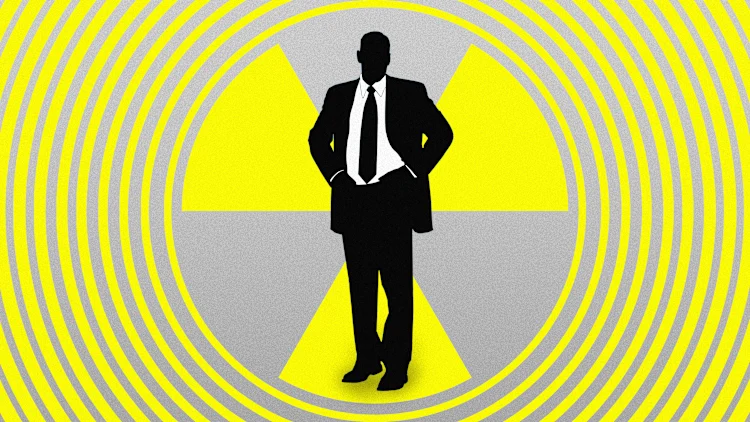
- What we found: A staggering 6 in 10 employees are currently stuck with a toxic boss, with over half (53%) having gone to therapy because of one.
- The stat you can’t ignore: The AI race is driving toxic boss energy. Over two in five (44%) workers said their company invests more in AI than in leadership coaching and training.
- What to consider: Employees are pushing back against the toxicity. Over half (55%) have taken action in response to their toxic boss, with the youngest employees stepping up most (73% of Gen Z). Two-thirds (64%) said better leadership training would be the best way to reduce toxic behavior.
What this means: “We’re in the largest technology investment cycle in a generation, and the human side of work is left behind,” says Libby Rodney, Chief Strategy Officer at The Harris Poll. “Toxic leadership isn’t a character flaw. It’s an investment failure. These are today’s managers, never trained or held to a standard, and now we’re asking them to lead through a transformation they weren’t equipped for before AI even arrived.”
Crypto Tips Into The Mainstream
In our annual State of Crypto Holders Report with the National Cryptocurrency Association (NCA), we find that crypto has become a routine part of financial life in America.
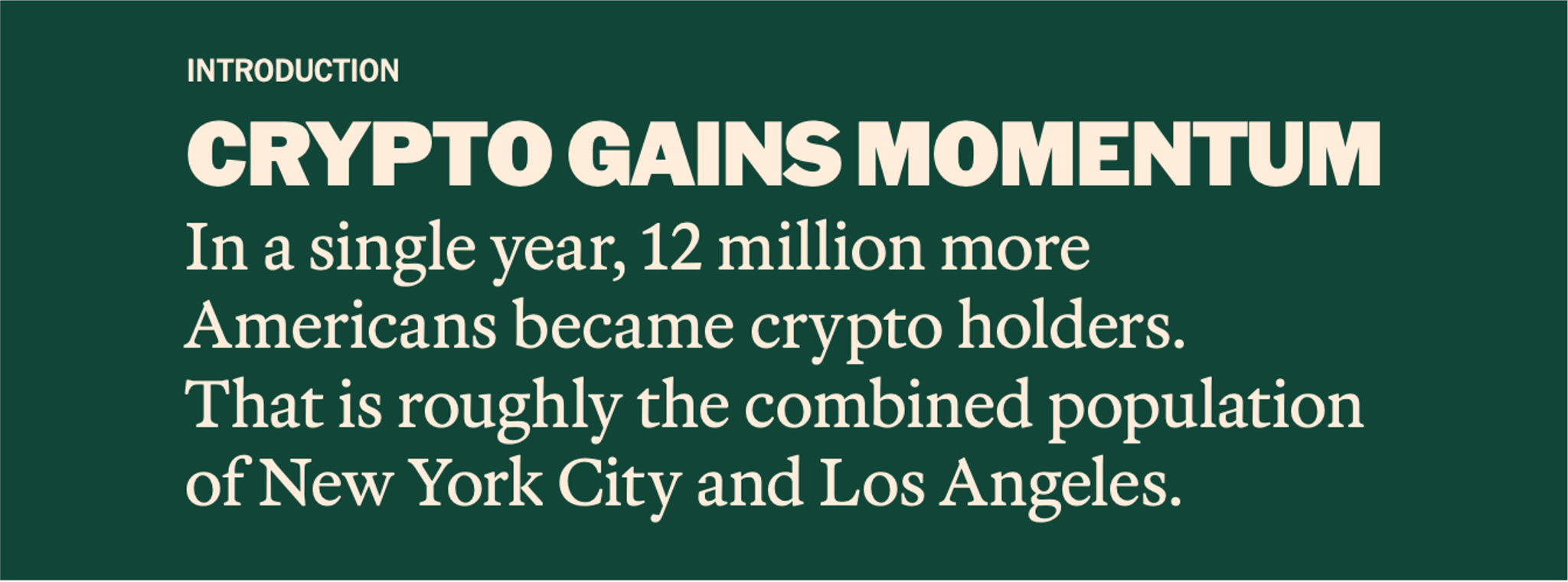
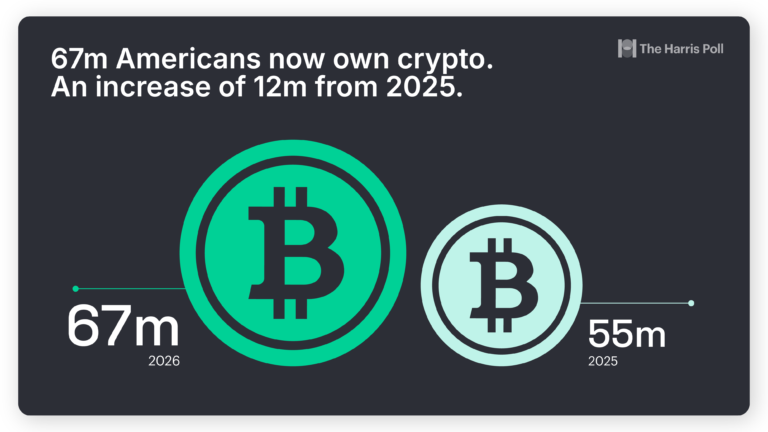
- What we found: 67 million Americans own crypto today, a 12 million increase from just last year. With over half of all owners saying it has increased their financial independence (54%).
- The stat you can’t ignore: The face of crypto is changing—a 10% rise in ownership for women. A quarter (23%) make less than $75k. Holders are just as likely to work in construction and manufacturing (21%), second only to the combined share in tech and finances (26%).
- What to consider: From novel to normal. Four in ten are sending crypto to family and friends (41%) and paying for goods and services with it (40%).
What this means: Crypto is becoming increasingly mainstream, no longer a niche investing interest of young tech fans. “[Owners] come from all walks of life, spanning regions, genders, incomes, political party lines, and beyond,” said Stuart Alderoty, President of the NCA.
The Golden Age Nobody’s Talking About
Science is moving faster than headlines, and bringing some needed optimism, as reflected by our CSO Libby Rodney in the latest Next Big Think!
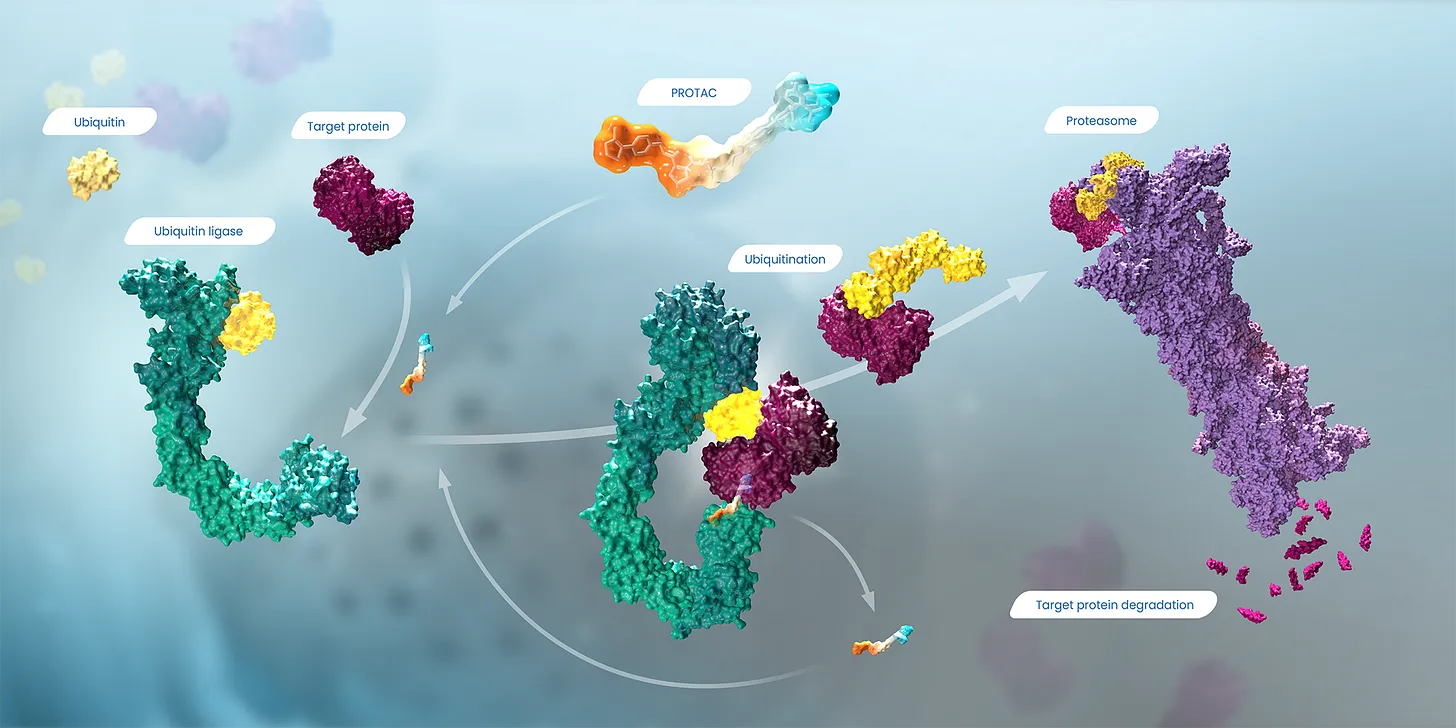
- What we found: The highest-leverage intervention in cancer isn’t a better drug; it’s intercepting the disease before it forms. Two-thirds of Americans (65%) want a system built around prevention rather than treatment.
- The stat you can’t ignore: There are 18 million cancer survivors in the U.S. Yet, there is no cancer equivalent to cardiac rehab, no personalized survivorship care.
- What to consider: In the era of the “Medical Main Character,” AI offers a bright promise of what it could be. The AI medical demand is growing, with half interested in genomic screening (54%) and AI-assisted diagnoses (46%).
What this means: “People don’t take proactive action on their health because they don’t think the data pertains to them. It’s abstract. It’s someone else’s risk profile,” points out Libby. “But when you hand someone their own genomic data, their own biomarkers, their own inflammatory profile, people act. Knowing changes behavior.”