


 4 Min Read
The latest trends in society and culture from The Harris Poll
Good morning from New York.
One Interesting Number: 52. Over half (52%) of Americans bond over things they mutually despise. Whether it’s Snapchat filters, sparkling water, or capri pants, a negative social groundswell likely helped Kendrick win his Grammy.
The Groceries Are Too Damn High
The S&P 500 is up over (14%) this year, yet Americans are still sour on the economy in this morning’s new Harris Poll with The Guardian.
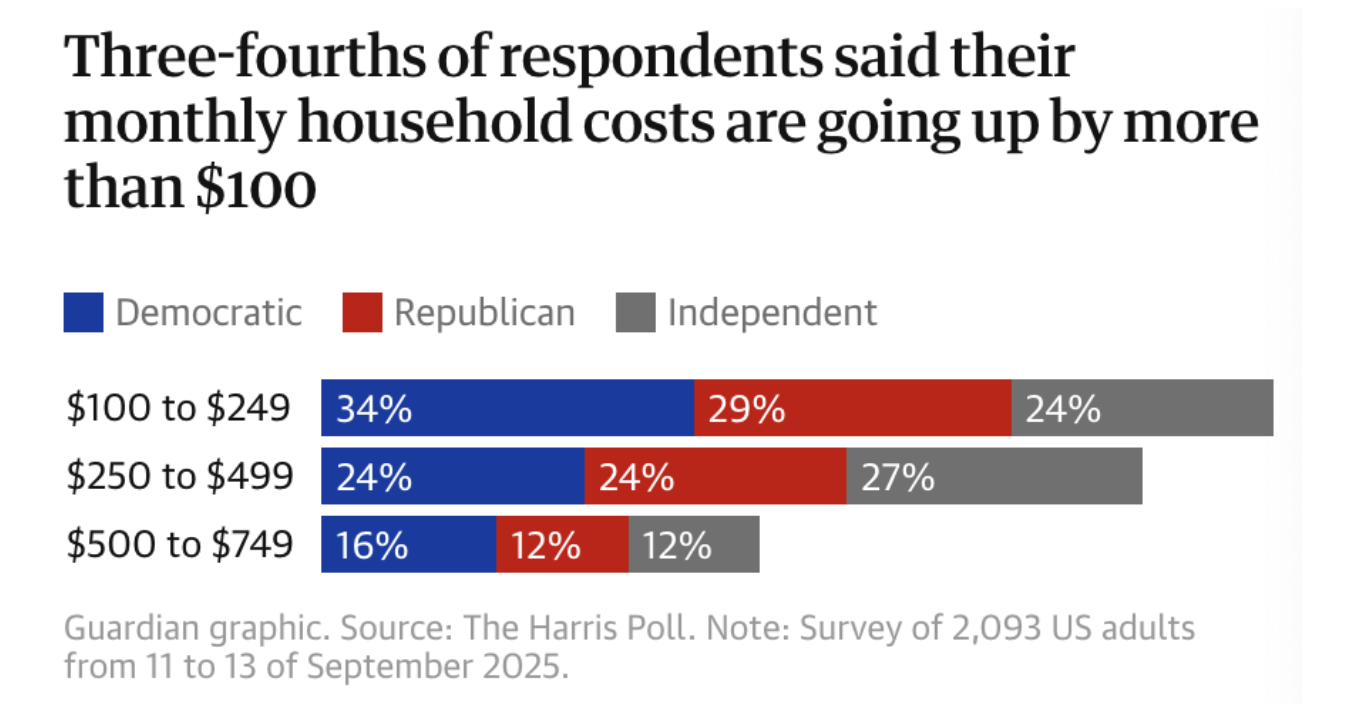
- What we found: Prices are still going up: Nearly three-quarters of Americans (74%) say their monthly household costs have increased by at least $100 from last year.
- The stat you can’t ignore: A majority (54%) of Americans believe the economy is in a recession, (+5% pts) more than last September.
- What to consider: Independents join Democrats in blaming tariffs on price increases versus last year, when, with Republicans, they saw their economic benefits.
What this means: “Many believe the 2024 presidential election was a referendum on Biden’s economy. Inflation soared in the years after the pandemic while wages struggled to keep up, leaving many Americans feeling like their paychecks were losing power,” details The Guardian’s Lauren Aratani. “But with just over a year until the midterm elections, Trump’s economy isn’t looking much brighter. The majority of Americans (53%) think the economy is getting worse, compared with (48%) who said the same last year.”
Most Leaders Admit They Can’t Trace Their AI Decisions
Despite their rapid adoption, global data leaders admit they can’t fully trace all their AI decisions in our new survey with Dataiku.
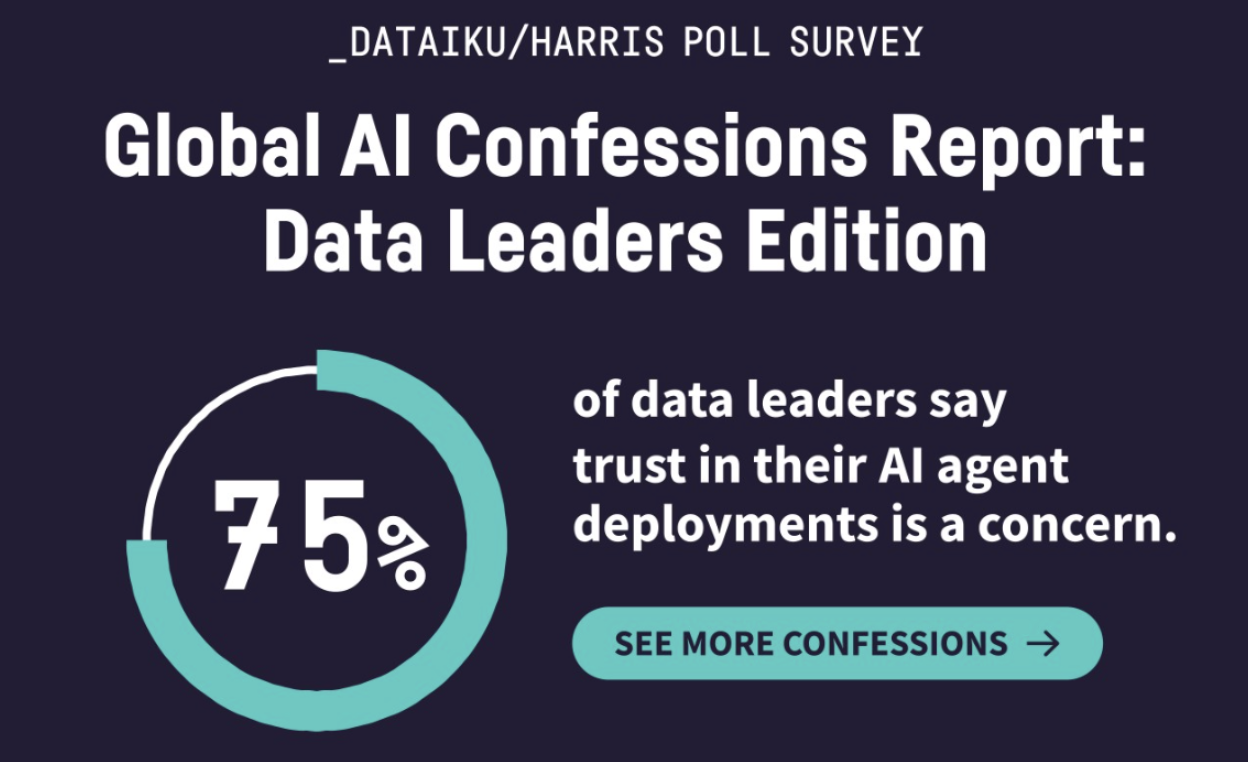
- What we found: Globally, (59%) of leaders say AI hallucinations and inaccuracies have caused business issues in the past year, and half (50%) say fewer than half of their AI agents make it beyond proof of concept.
- The stat you can’t ignore: (95%) of data leaders admit they can’t fully trace their AI decisions. Yet, only a fifth (19%) always require AI agents to “show their work” before approval.
- What to consider:Two-thirds (69%) report that AI business insights are taken more seriously than human ones, while simultaneously admitting they’re not sure if their AI agents could pass an audit.
What this means: Beneath a rapid adoption of AI in daily operations lies a revealing tension – significant gaps in trust, explainability, and readiness. These risks heighten when C-suites are disconnected. While we’ve found how bullish global CEOs were on AI, only (39%) of CIOs/CDOs said their C-suite truly understands AI. Over two-thirds (68%) say executives are overestimating its accuracy. It will take a lot more work (and communication) to get AI from proof-of-concept to a measurable business value.
Wall Street Pushes Private Assets Into 401(k)s. Does Anybody Want Them?
Wall Street is pushing private assets into 401(k)s. But a Wall Street Journal-Harris Poll finds that while most investors are satisfied, many are persuadable.
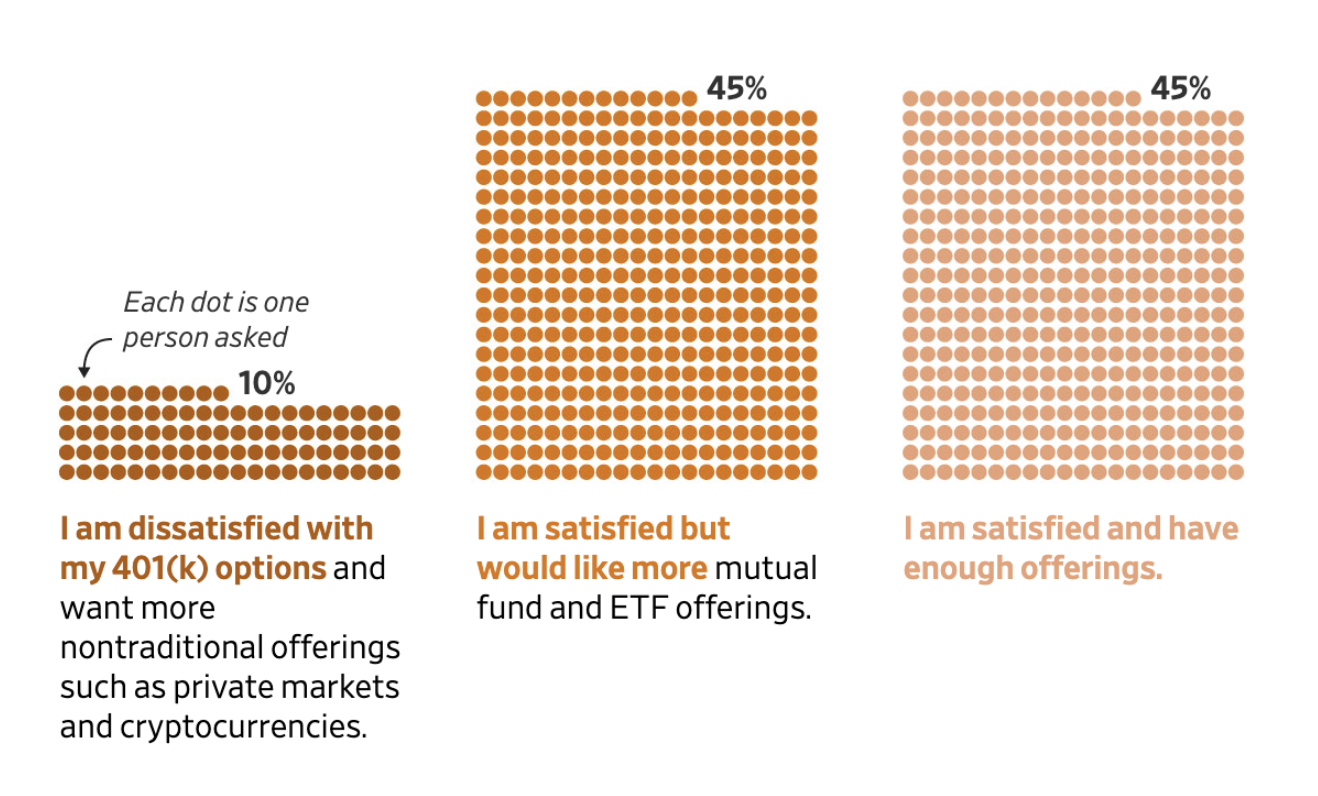
The Wall Street Journal-Harris Poll (2025) | Rosie Ettenheim/WSJ
- What we found: Wall Street wants to give everyday retirement savers access to private assets, yet 401(k) investors aren’t exactly clamoring for them.
- The stat you can’t ignore: Only one in ten investors (10%) is dissatisfied with their current 401(k) investment offerings and wants more nontraditional options.
- What to consider:
What this means: “Taken together, the numbers make plain the task ahead for the bevy of Wall Street firms…that are angling to bring private assets to the $13 trillion 401(k) market,” writes WSJ’s Miriam Gottfried and Anne Tergesen. “It will take a high-powered sales and education effort to persuade regular American investors to put part of their life’s earnings into private assets…Still, many Americans seem potentially persuadable. Some (59%) of survey respondents (Harris Poll) had a general interest in investing in private companies.”