


 5 Min Read
20 Brands Catching Gen Z’s Attention: Ad Age-Harris Poll
A recent Ad Age-Harris Poll uses data from QuestBrand by The Harris Poll to rank the top 20 brands by quarter-over-quarter brand equity growth among Gen Z adults (ages 18-28). The top seven growth brands from Q1 to Q2 2025 are listed below.
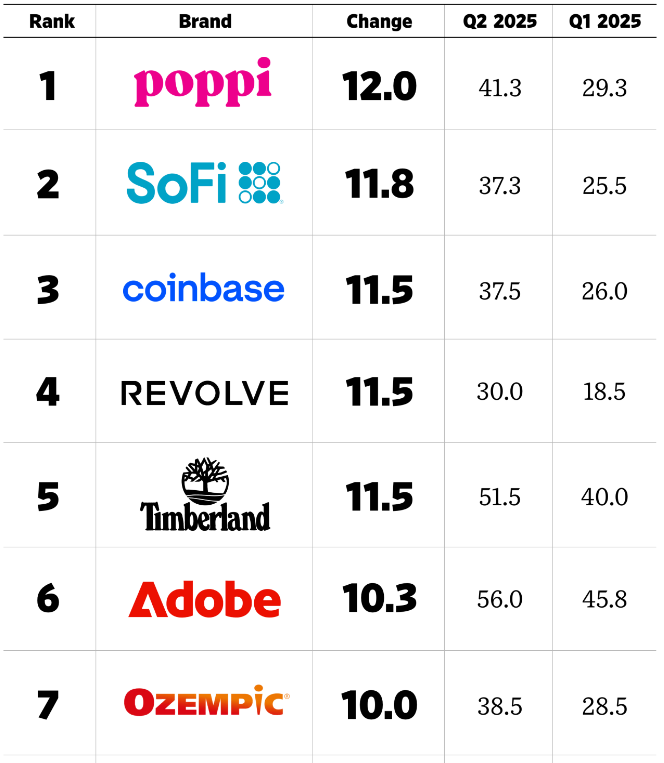
Surprised to see Ozempic on the Gen Z tracker?:
- More than a third (37%) of Gen Z plans to use Ozempic or Wegovy in 2025.
- “From a brand standpoint, Ozempic has crossed over…it’s no longer just a clinical drug, it’s a cultural shorthand.” – Justin Pincus, Managing Director of The Harris Poll’s QuestBrand
Want to know what Gen Z thinks about your brand? Schedule a demo with our QuestBrand team to see the platform’s advanced audience segmentation capabilities in action.
2025 Harris Poll AutoTECHCAST
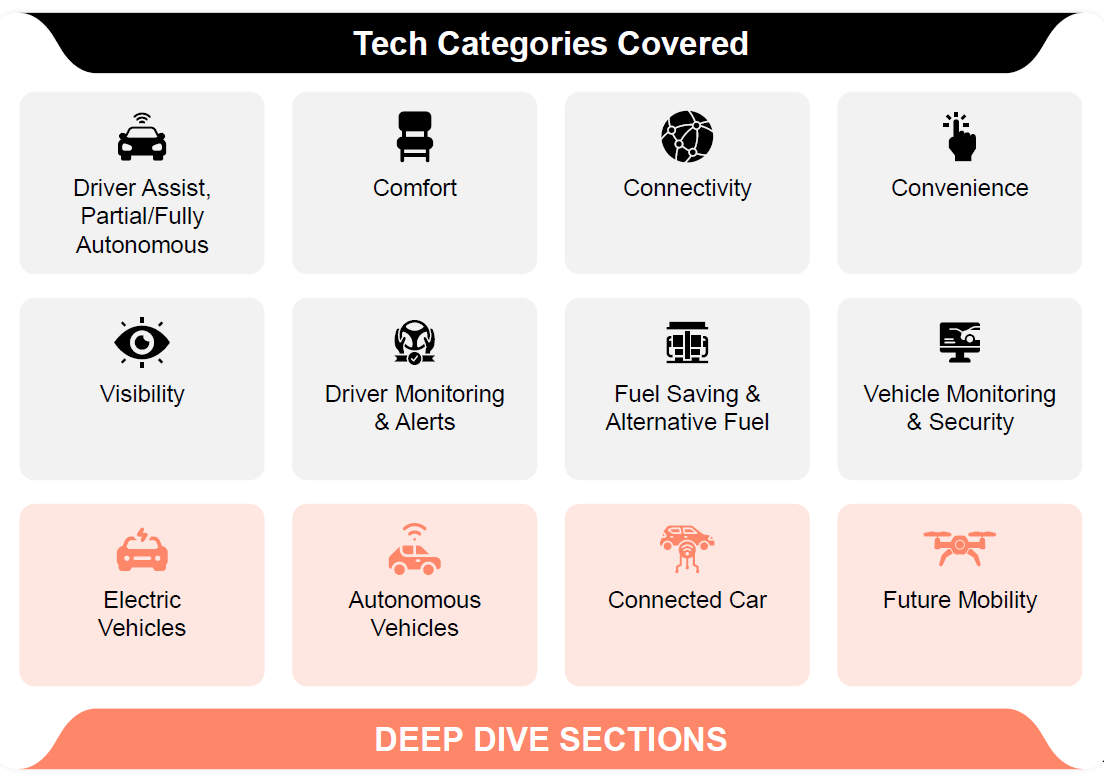
To succeed in the automotive industry, manufacturers and suppliers must strengthen their brand through strategic innovation and differentiation. This process involves selecting and integrating the right advanced technologies. How do they know which technologies to employ?
Based on responses from more than 10,000 current vehicle owners, the annual Harris Poll AutoTECHCAST report offers key insights into the technologies that make a difference to customer loyalty, product differentiation, and automakers’ business performance.
Contact our Corporate Strategy team for access to the full 2025 AutoTECHCAST report.
During The 2026 World Cup, Meaningful Brand Presence Begins With The Athletes
The World Cup is coming to North America next summer. To help companies connect with consumers during the tournament, we dug into recent Harris Poll data on Americans’ soccer fandom. One key takeaway: Americans are loyal to individual players, providing an opportunity for brands to partner with popular soccer stars:
- Keeping an eye out for their favorites: 55% of soccer fans agree that they have a favorite player(s) that they are excited to watch in the 2026 World Cup.
- Player-loyalty is as important as team-loyalty: 47% of soccer fans agree that they follow individual soccer stars as much or more than they follow a specific team.
- More than just a sport: 61% of soccer fans agree that individual athletes bring soccer to life for them.
- Who do you follow?: 21% of Americans say that they engage with soccer by following specific athletes on social media.
Interested in discovering more ways that brands can make the most of the World Cup’s presence on U.S. soil? Read the full brief, or download our report on American’s growing soccer fandom.
The Fertility Gap: Confronting Myths and Cultivating Support
Our Harris On Demand team recently ran a survey to better understand Americans’ knowledge of and experience with infertility/fertility services. Explore a few main takeaways below, and read the brief for more in-depth insights:
- Infertility misconceptions run rampant: Roughly half of Americans do not realize that infertility is neither mostly a female issue (49%) nor rare (45%).
- Earlier awareness is needed: 57% of parents, or those who are currently trying to conceive, say they never gave much thought to understanding their fertility before trying to have kids.
- Fertility issues are not rare: 37% of Americans between the ages 18-44 report that they or a partner have faced/are facing fertility issues.
- More open conversation is needed: 67% of Americans believe it’s important for people to talk honestly about their fertility struggles, but 42% say discussing their fertility with someone other than their partner feels too personal.
- Too many feel isolated and lack support: 44% of Americans who used/are using fertility services say they didn’t/don’t feel like they had/have anyone to turn to for support while undergoing such services.
Takeaway: “While the results of this research highlight vital gaps in knowledge and care, by implementing these strategies, we can help eradicate the stigma associated with infertility, creating a more informed and supportive environment for those facing these challenges. As a society, we have the power to act and ensure no one walks this path alone or uninformed.” – Emily Morton, Sr. Research Analyst at The Harris Poll.
Americans Are Learning About Medications From Television: Fierce Pharma-Harris Poll
Turn on the TV, and you’ll see ads touting medications that help Americans battle weight gain, arthritis, sexual dysfunction, psoriasis, and more. A recent Harris Poll survey conducted by our Harris On Demand team on behalf of Cadent explored the trends in pharmaceutical advertising, and their efficacy:
- Move over doctors, TV is providing healthcare options: While 68% of U.S. adults say that doctors/healthcare providers are one of their top sources for learning about new medications, almost as many (62%) cite TV ads.
- Ads inspire follow up: Seven-in-10 U.S. adults say they are at least somewhat likely to ask their doctor about a prescription medication after seeing a TV ad.
- We want to hear the benefits: Consumers (53%) are most likely to take action after seeing ads that present a drug’s medical benefits.
- Americans largely trust what pharma companies say: 69% of U.S. adults say they trust the educational information they receive from pharma companies.
Takeaway: “Harnessing the power of CTV and cross-screen advertising is crucial for pharmaceutical advertisers. These platforms don’t just introduce new medications—they are a critical factor for driving brand awareness and engagement throughout the patient journey, encouraging consumers to discuss the advertised medications with their healthcare providers.” – Bradley Deutsch, SVP at Cadent Health